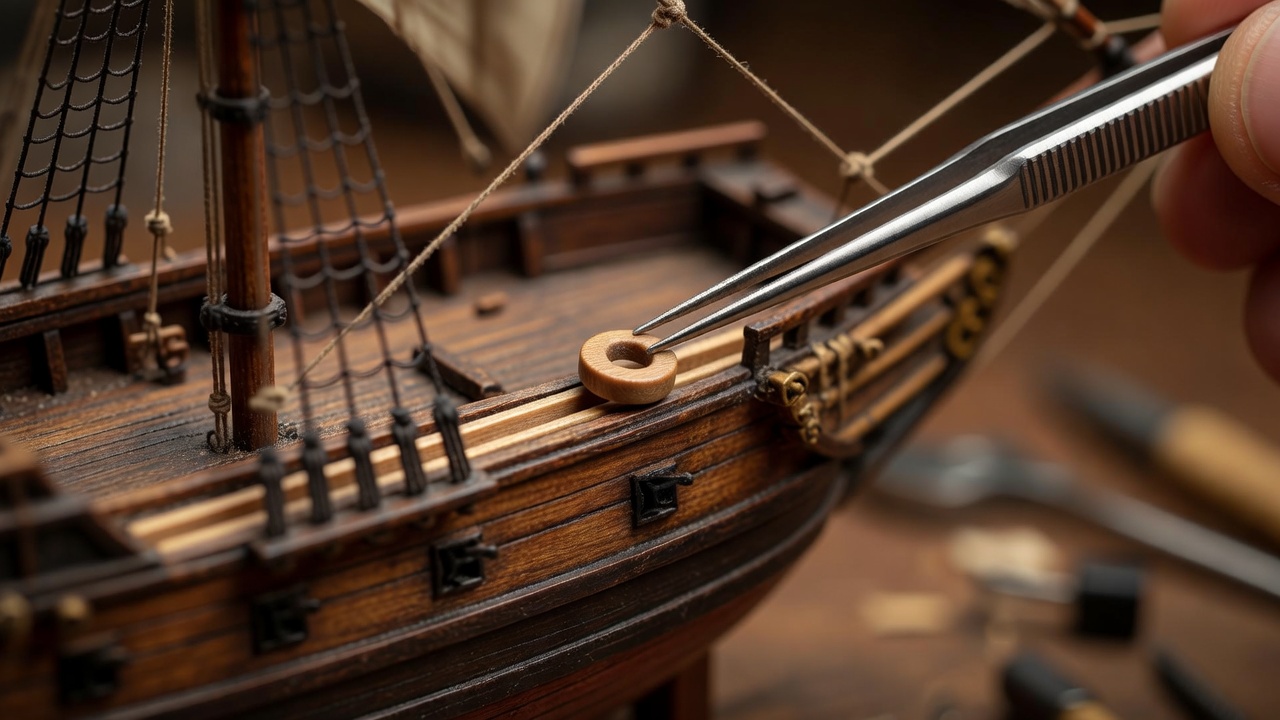
Start with the finish you want, then work backwards
Most unfinished models in the world were abandoned for the same reason: the builder chose the ship they loved most rather than the ship they were ready for. A first-rate ship of the line such as HMS Victory is a wonderful subject, and plenty of kits exist for her, but she asks for hundreds of hours and several thousand rigging operations. A small revenue cutter or a fishing smack asks for perhaps a tenth of that and teaches every one of the same skills.
So ask yourself what you want to see on the shelf in six months. A clean hull and a tidy single-masted rig? That is entirely reachable. A full-rigged clipper like the Cutty Sark, now preserved in dry dock at Greenwich? Lovely, and a realistic third or fourth build. The yard's rule is simple: the first hull is for learning, the second for confidence, the third for showing off.
The three construction methods
Solid hull. You receive a block of basswood or similar, usually rough-shaped by machine, and carve it to the final lines using templates. It is the most forgiving method because mistakes can be filled and sanded. Model Shipways has long offered solid-hull kits of American working craft, and they remain a gentle introduction to reading plans.
Plank-on-bulkhead. The most common kit design today. A plywood false keel carries slotted bulkheads that set the hull shape, and you plank over them, often in two layers: a cheap first layer to establish the shape and a thin veneer of walnut or pear as the show surface. Makers such as Artesania Latina, Amati, Mantua, Occre, Billing Boats and Caldercraft all build ranges around this method.
Plank-on-frame. Every frame is made individually, as in the real shipyard, and the hull may be left partly unplanked to show the structure. It is the method behind many of the exquisite models in collections like the National Maritime Museum in Greenwich and the Mariners' Museum in Newport News. It is also slow, demanding and best saved until you can fair a hull by eye.
Kit comparison at a glance
The hours below are typical ranges reported by hobby builders for a first or second attempt. Your own pace may sit outside them, and that is fine.
| Kit type | Common scale | Difficulty | Build hours (range) | Good first subject |
|---|---|---|---|---|
| Solid hull | 1:48 – 1:96 | Beginner | 40 – 100 | Dory, skipjack, pilot schooner |
| Plank-on-bulkhead, single mast | 1:48 – 1:64 | Beginner to intermediate | 80 – 200 | Cutter, fishing smack, longboat |
| Plank-on-bulkhead, two or three masts | 1:64 – 1:90 | Intermediate | 250 – 600 | Schooner, brig, HMS Bounty |
| Plank-on-bulkhead, ship of the line | 1:72 – 1:98 | Advanced | 800 – 2,000+ | HMS Victory, USS Constitution |
| Plank-on-frame | 1:48 – 1:64 | Advanced | 600 – 2,500+ | Section models, naval cutters |
Reading a kit box like a shipwright
- Look at the plans, not the photo. Full-size plan sheets with every rigging line drawn are worth more than a glossy box.
- Check the strip wood. Good kits supply straight, evenly cut strips with no fuzzy edges. Reviews on builders' forums often mention this.
- Count the fittings. Cast cannons and brass parts can be upgraded later. Poor timber cannot.
- Check the language of the instructions. Some older kits rely on a picture sequence alone. Fine for an experienced builder, harder for a beginner.
The small tool chest
You do not need a workshop. A cutting mat, a hobby knife with plenty of blades, a razor saw, a set of needle files, sanding sticks, a pin vise with fine drills, fine and bent tweezers, small clamps, pins, a steel rule and a plank bender or old soldering iron will see you through the whole first hull. Add a good lamp and a magnifier before you add any power tools. Your eyes are the most important instrument at the bench.
A first hull the yard recommends
Look for a single-masted vessel at 1:48 to 1:64, plank-on-bulkhead, with double planking and a rig of fewer than forty lines. It will teach you fairing, spiling, deck planking, mast making, deadeyes and belaying. When it is done you will know, from your own hands, how every bigger ship goes together. Then move on to planking and rigging.
 01
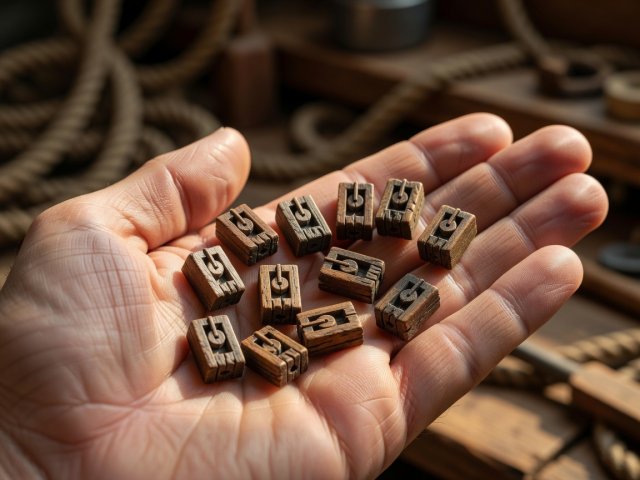
Upgrade the blocks later
Kit blocks are often crude. Replacement sets in boxwood are inexpensive and transform a rig.
Rigging stage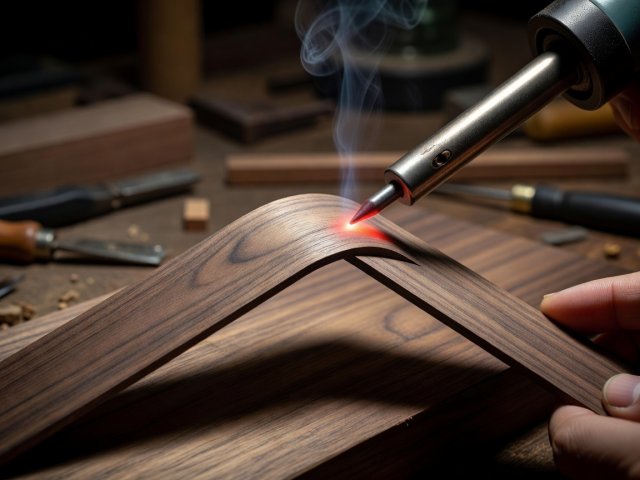 02
Heat, not force
Damp strip wood bent over gentle heat keeps its curve and never splits at the bow.
Planking stages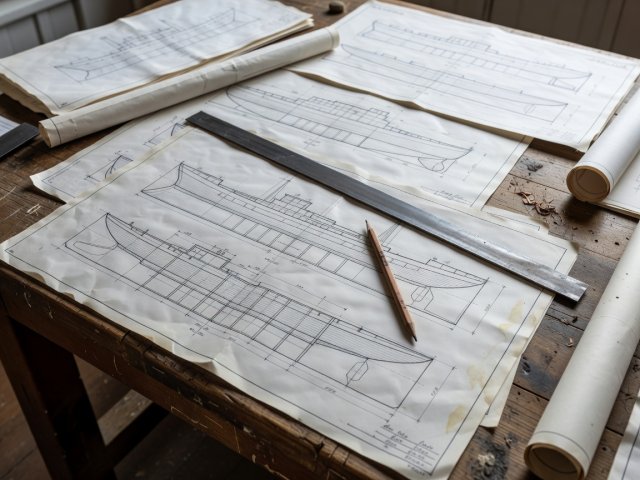 03
Questions about a kit?
Send us the box contents and we will tell you honestly what we think.
Write to the yard